
The broader markets are, however, outperforming the larger peer.

'Trading without strict position sizing, stop-loss discipline, or a clear exit plan almost guarantees losses.' 'Chasing tips, reacting to intraday noise, or assuming frequent trading improves outcomes are equally damaging habits.'

Global funds have pulled out Rs 1.54 trillion from domestic stocks in fiscal 2024 - 25 (FY25), the highest-ever outflow recorded so far, according to the data compiled by Business Standard. The last time the global funds exited Indian shores in droves was back in 2022, when they sold a net Rs 1.41 in the backdrop of Covid-19.

Dalal Street minnows stole the show in 2024, giving handsome returns to investors, helped by a largely optimistic trend in the stock market and impressive retail investors' participation. Analysts attributed the positive trend in the equity markets, where the benchmark indices shattered many records this year, to robust domestic liquidity, strong fundamentals of the Indian economy, and policy continuity.

Among Sensex shares, Bajaj Finserve, ICICI Bank, Bharti Airtel, Bajaj Finance, Sun Pharma, Maruti Suzuki, ITC, and Nestle were the lead gainers. On the other hand, L&T Wipro, IndusInd Bank and TCS and Tata Motors were the lead losers.

rediffGURU Vivek Lala answers your income tax and personal finance queries.

rediffGURU Jinal Mehta answers readers' financial planning and health insurance queries
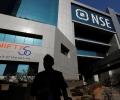
The benchmark Nifty and Sensex could see another 8-10 per cent from the current levels, said HDFC Securities in its outlook for equity markets in 2024. The brokerage said that the market movement in the next year will not be linear, and there will be more volatility. When asked about the market reaction to the General Elections in 2024, Dhiraj Relli, managing director and CEO of HDFC Securities, said more than the outcome of the elections, the market movement in the next three to four months will decide the market trajectory post elections.

From the Sensex pack, Zomato jumped over 7 per cent. ICICI Bank, Mahindra & Mahindra, Tata Motors, Larsen & Toubro, Asian Paints, Titan, Kotak Mahindra Bank and State Bank of India were among the gainers. However, Bajaj Finserv, Bharti Airtel, Tech Mahindra and Reliance Industries were the laggards.

'Large-caps are better placed to withstand the impact of higher input cost inflation, rising rates and withdrawal of excess global liquidity.'

Ask rediffGURU and PF, MF and insurance expert Purshotam Lal your mutual fund, insurance and personal finance-related questions.

Largecap companies are generally less vulnerable to economic slowdowns than their mid- and smallcap counterparts.

From the Sensex basket, Tata Motors, State Bank of India, Tata Steel, Power Grid, NTPC, Bajaj Finserv, Bajaj Finance and Asian Paints were the major laggards.

Mid-cap and small-cap indices continued to be on investors' radar.

Rebalance your portfolio in case it has become overweight on equities vis-a-vis your strategic asset allocation.

The benchmark indices are set to end their five-month gaining streak, but the market breadth continues to hold strong So far this month, stocks gaining have outnumbered those declining, a sign that the bulls still have the upper hand, even as the pullback in the S&P BSE Sensex and the National Stock Exchange Nifty indicates otherwise. On the BSE, 2,126 stocks have advanced and 1,955 have declined in August, translating into an advance/decline ratio (ADR) of 1.1.
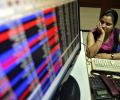
Though the markets have lost ground since the past few sessions, analysts do not seem worried.

Among Sensex stocks, Wipro gained the most by 3.29 per cent. Ultratech Cement, Reliance Industries, Hindustan Unilever, Nestle, NTPC, M&M, HDFC Bank, ITC, Kotak Bank and Axis Bank were among the winners. On the other hand, HCL Tech fell the most by 1.24 per cent. SBI, TCS, Infosys, IndusInd Bank and Tata Steel also dropped.

'As the markets are expected to remain jittery in the near term, we advise investors to use this opportunity to enter quality largecaps from a long-term perspective.'

rediffGURU Dev Ashish answers your personal finance and mutual fund queries.

Ask rediffGURU Ulhas Joshi your mutual fund queries.

Buying stocks during a dip, says Amar Nandu, research analyst, Samco Securities, can lead to higher compounding returns when the uptrend begins.

Micro-cap stocks are in the line of fire as market regulator Securities and Exchange Board of India (Sebi) is tightening its noose around investment in small-cap stocks. Given this, analysts suggest investors exit the segment, at least, for the time being. Independent market analyst, Ambareesh Baliga, for instance, said that regulators have gotten worried on the valuation front, though belated, which could prove to be the last straw on the camel's back.

Ask rediffGURU and PF expert Nitin Narkhede your mutual fund and personal finance-related questions.
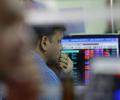
Equity benchmark indices Sensex and Nifty declined for the second straight session on Friday following selling in banking, financial and select IT shares amid a weak trend in global markets. The 30-share BSE Sensex dropped by 125.65 points or 0.19 per cent to close at 66,282.74 as 16 of its constituents fell and 14 advanced. The index opened lower and fell further by around 513 points to the day's low of 65,895.41 in morning deals.

Ask rediffGURU and PF expert Nitin Narkhede your mutual fund and personal finance-related questions.

HCL Tech was the top loser in the Sensex pack, shedding over 3 per cent, followed by Infosys, Bajaj Finserv, NTPC, ICICI Bank and IndusInd Bank.

The sharp rally in the broader markets has propelled India's market capitalisation (m-cap) to a new high. The combined m-cap of all BSE-listed firms rose to Rs 291.9 trillion in intraday trade on Thursday before settling lower at Rs 290.9 trillion. The previous record was on December 14, 2022, at Rs 291.3 trillion.

From the 30-share blue-chip pack, Adani Ports dropped over 4 per cent. UltraTech Cement, Sun Pharma, IndusInd Bank, NTPC and Tata Steel were also the among the laggards. Nestle, ICICI Bank, Infosys, Tata Consultancy Services and HCL Tech were among the gainers.

Dwaipayan Bose on how index funds play a key role in the diversification of portfolios and help manage risks

With the markets scaling new highs, as many as 43 stocks from the Nifty50 index and 27 of the 30 scrips that are part of the S&P BSE Sensex are trading above their respective 200-day moving average (DMA). The 200-DMA is seen as one of the most relevant trend indicators by investors and traders, who believe that stocks and indices trading above this level possess strength and are likely to rally in the short to medium term, while the ones trading below this level are viewed as bearish and expected to see a sell-off. Wipro, UPL, Kotak Mahindra Bank, Hindalco, Infosys, Cipla, and Adani Enterprises are the only stocks from the Nifty50 pack that are still below their respective 200-DMA, the exchange data suggests.

'In the next one-and-a-half, two months you'll get decent amount of opportunities in the mid-cap and small-cap sector at lower levels.'

'Pockets of mid and small-cap indices are showing exuberance and are discounting even FY23 valuations now.'
At a time when investors are preferring higher-risk investment products like thematic and small-cap mutual fund (MF) schemes, some fund houses are exploring the possibility of going further down the market-capitalisation (m-cap) ladder to unearth newer investment opportunities. HDFC MF had filed papers with the capital markets regulator - the Securities and Exchange Board of India (Sebi) - earlier this year for an active micro-cap scheme. Some more fund houses are keen on launching such schemes, say industry observers.

The market benchmark appears set to end 2013 on a positive note with a modest gain of over 7 per cent, but such gains are not to be seen in a majority of stocks available in the market, which predominantly include those of mid-size and smaller companies, shows an analysis of various indices.

rediffGURU Ulhas Joshi answers your mutual fund queries.

Actively-managed large-cap mutual fund (MF) schemes have managed to regain some lost sheen this year after faring poorly in the 2022 calendar year (CY22). At the end of the first six months (H1) of CY23, 78 per cent of the active large-cap schemes were ahead of the Nifty50 index funds as against just 26 per cent in 2022. When compared to the Sensex index funds, 61 per cent active funds have delivered better returns, shows an analysis of Value Research data.

Do you have financial planning or income tax queries? Ask rediffGURU Anil Rego.

Trumponomics, poor growth, and high valuation certainly don't make a bullish recipe for Indian markets, warns Debashis Basu.
From the Sensex pack, Larsen & Toubro jumped 4.26 per cent to emerge as the biggest gainer, followed by IndusInd Bank, Tech Mahindra, State Bank of India, HCL Technologies, Power Grid, NTPC, Axis Bank, Kotak Mahindra Bank, HDFC Bank and Wipro. Mahindra & Mahindra, Infosys, UltraTech Cement and Hindustan Unilever were the major laggards.
